
§ About the desk — Brooklyn, NY

The translation desk for documents that can’t afford a second meaning.

A small Brooklyn team that looks after patent filings, engineering specifications and safety manuals in English, German, Japanese and Spanish — and looks after the people who send them, too. Below: who reads your file, the house rules we keep, and what happens on the day it arrives.

  • Filed under · About
  • Revised · October 2026
  • Directions · 12
  • Desk hours · Daily 10–6
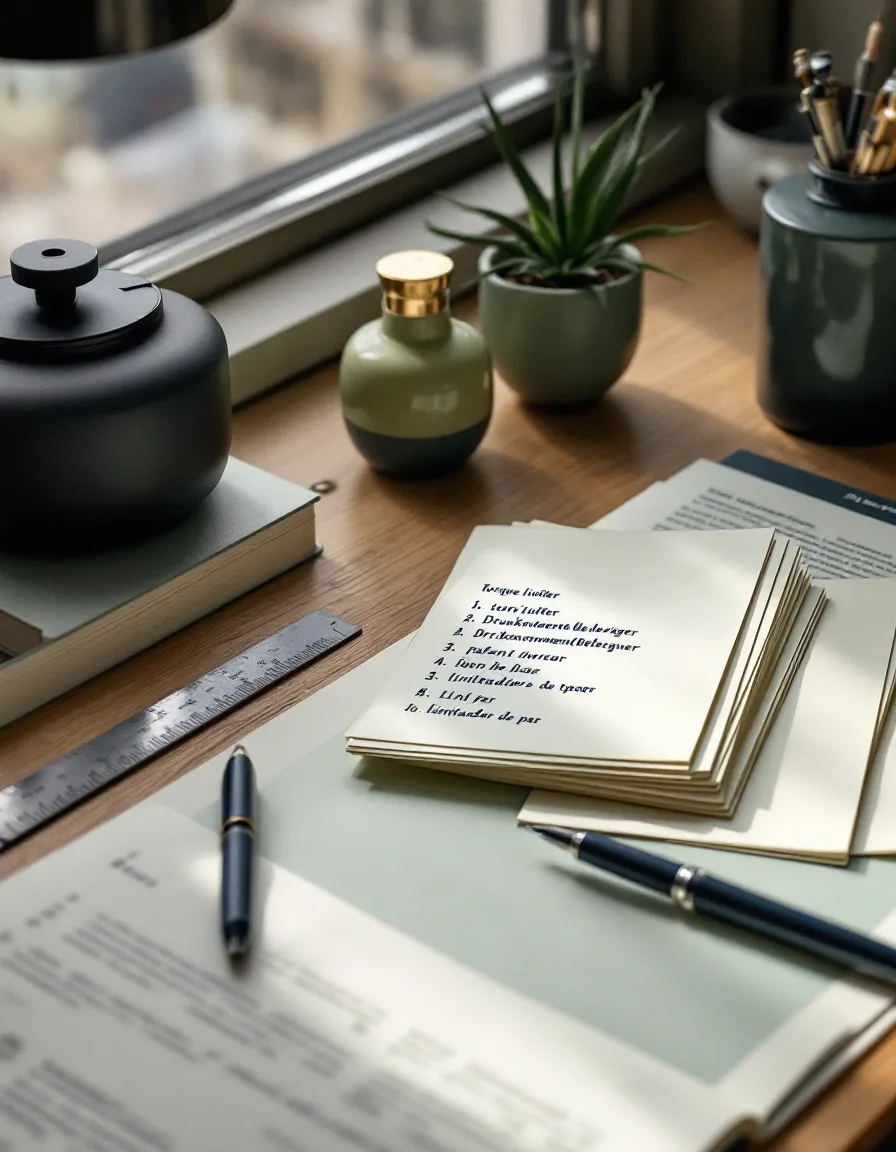
Glossary index cards lettered in English, German, Japanese and Spanish beside an annotated patent claim set and a navy fountain pen
fig. 1 — a glossary, mid-draft57th St

Why the desk exists

We set up the desk for the reader who can’t ask what we meant.

A patent examiner in Munich doesn’t phone the applicant to check a word.n.1 A technician in Osaka reading a lockout procedure won’t email to ask which valve comes first. A translated document has to stand entirely on its own, in front of someone who will act on exactly what it says.

Eddyquill was set up in Brooklyn to look after that kind of document, and only that kind: patent filings, engineering specifications and product safety manuals, between English, German, Japanese and Spanish. Keeping the list short is deliberate.n.2 It lets the same small group learn your vocabulary, your drawings and your examiner’s habits, and carry what they learn from your first file to your fortieth.

Our measure of a good translation: nobody downstream has to wonder.

It is also why we price by the package rather than by the hour.n.3 You should know what a filing will cost before the filing begins — and accuracy should never have to compete with a meter that’s running.

The rest of this page is the practical part: the rules we hold ourselves to, how a file moves through its first day, and exactly whose hands it passes through on its way back to you.

  • n.1 · The examinerThe person reading your claims at the EPO, JPO, OEPM or USPTO — the audience we write every claim set for.
  • n.2 · A short listWe politely decline brochures, websites and literary work, and suggest where those are done well.
  • n.3 · By the packageDesk Brief $545 · Filing Package $1,865 · Manual Programme $3,940. Details on Services.
The house style sheet

Six rules every file is held to, whatever the language.

Every translator keeps a style sheet for a client. This is ours for ourselves — pinned above the desk, and the first thing a new linguist reads.

Eddyquill · house rulesApplies to all 12 directions
  1. R-01

    Your word outranks ours.

    If your engineers call it a “retaining ring,” it stays a retaining ring on every page — even where a dictionary would rather say “circlip.”

  2. R-02

    Linguists write into their native language.

    German pages are written by a native German writer, Japanese by a native Japanese writer, Spanish by a native Spanish writer. The reader hears their own language, not a careful approximation of it.

  3. R-03

    Claims always get a second reader.

    Not a spot check — a full read against the source for scope, antecedent basis and the transitional phrase, before anything is signed.

  4. R-04

    Questions reach you early, in one batch.

    Instead of a trickle of emails, you receive one tidy query sheet in the first days of the job, so your engineer answers once and gets back to work.

  5. R-05

    The price you approve is the invoice.

    If a file runs past its package ceiling, the add-on — $236 per extra 1,000 words — is in the same reply as the quote, never discovered after delivery.

  6. R-06

    Your term base leaves with you.

    Glossaries are delivered as .tbx and .xlsx, ready for your next vendor, your own team, or for us when the next filing arrives.

Between 10am and 6pm

What happens to your file on the day it lands.

You shouldn’t have to chase a translation desk for a price. Here is the shape of a file’s first day with us, so you know what to expect and when.

  1. 10:00

    Opened and counted

    Source words tallied; figures, tables and text inside drawings noted so nothing is missed in the price.

  2. 11:30

    Matched to a package

    Desk Brief, Filing Package or Manual Programme — with any overage costed in plain figures.

  3. 14:00

    First term sweep

    Recurring terms are pulled out, so the glossary is underway before you’ve even said yes.

  4. 16:30

    Written quote sent

    Price, turnaround for your language pair, and the date the file will be in your hands.

  5. 18:00

    Desk closes

    Approve this evening and translation begins at ten the next morning.

Files that arrive in the last hour are quoted by 11am the next day. Open seven days — a Saturday file gets a Saturday quote.
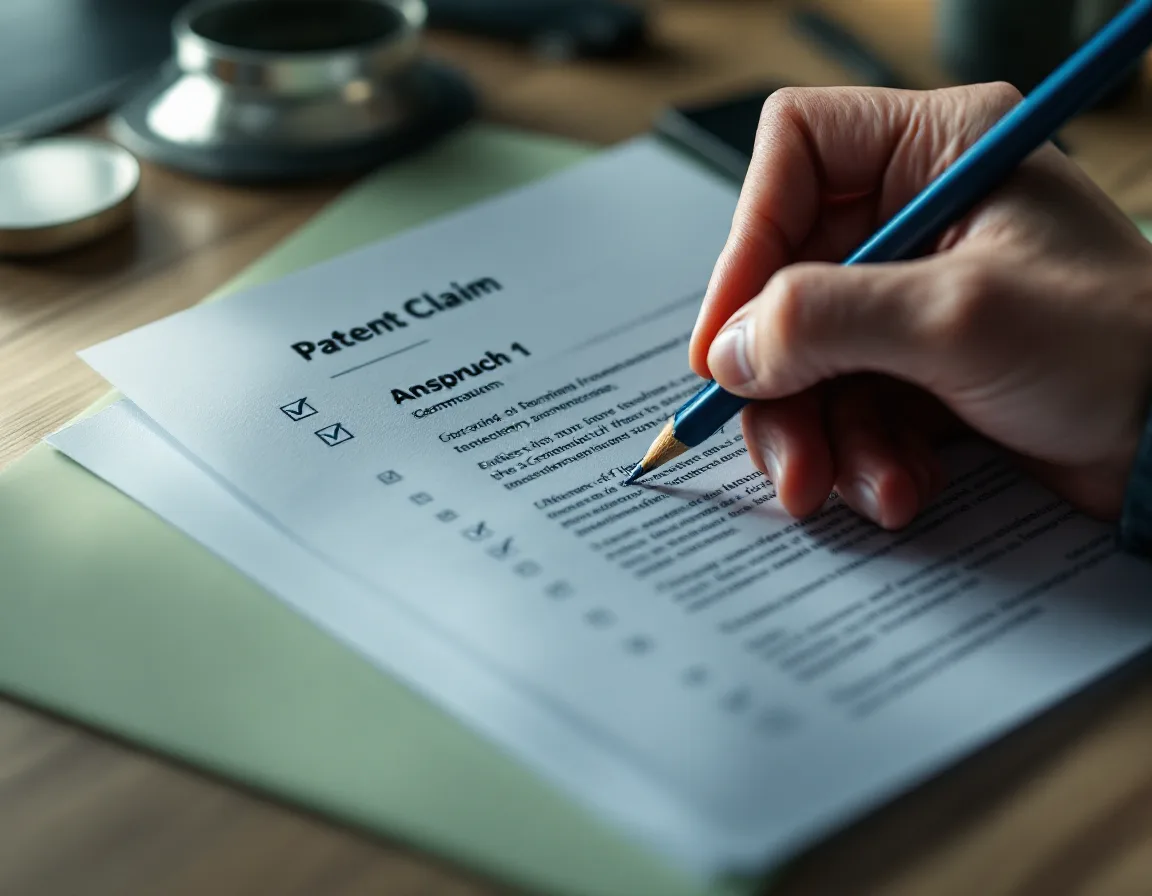
A reviewer’s hands checking a printed German patent claim line by line against its English source with a navy pencil and ruler
fig. 2 — a claim set on its second read

Chain of custody

Four sets of hands, one file, and you always know whose.

Your document never disappears into a pool of anonymous freelancers. It moves through four clear roles, each with a single job, and you have one person to call about all of them.

  1. Hand 1 · first and last

    The desk lead

    Your one point of contact. Reads the file, writes the quote, keeps the query sheet, answers the phone at (917) 414-5555 — and is still there when the delivery goes out.

  2. Hand 2 · into the target language

    The linguist

    A native writer of your target language with a working background in the field — mechanical, electrical, chemical or medical device — matched to the subject of your document, not just the pair.

  3. Hand 3 · against the source

    The second reader

    A separate linguist who reads the translation line by line against your original, with particular care for claims, warnings and every number with a unit beside it.

  4. Hand 4 · back into your layout

    The layout specialist

    Returns manuals in InDesign, FrameMaker or XML, with signal words and pictograms placed where your labelling standard expects them.

When the four are done, the desk lead signs the certificate of accuracy — naming your document, its language pair and the date — and sends it with your file.

Is this the right desk for it?

What we take on gladly — and what we’d rather hand to a friend.

Saying no to the wrong file is part of looking after you. If something sits outside our four languages or three document types, we’ll tell you the same day and, wherever we can, suggest where to take it.

Column A

Gladly on our desk

  • Patent applications, claim sets and PCT national-phase entriesFiling Package · $1,865
  • Office action responses and prior-art referencesUsually a Desk Brief · $545
  • Datasheets, tolerancing notes, test protocols and RFQsDesk Brief · $545
  • Operating, maintenance and safety manuals, label sets and IFUsManual Programme · $3,940

Column B

Happily passed along

  • Brochures, websites and ad copyThat’s transcreation — a different craft deserving its own specialist.
  • Languages beyond our fourAsk, and we’ll share who we’d trust with it.
  • Live interpreting at meetings or depositionsWe work on the page, not in the room.
  • Translations that must be sworn before a foreign courtOur signed accuracy certificate suits filings and regulators; sworn work needs a court-appointed translator.

Whenever you’re ready

Send the first file. We’ll come back with a price before six.

Attach the document, name the target language and the date you need it in hand. The glossary, the second read, the certificate and the layout are ours to arrange.

Call the desk · open till 6pmCall